
When we are making clothing, we can use interlining to make our clothing more stylish, but there are still many requirements for interlining in application, such as casual clothing, shirts, home clothes and so on.
Therefore, the interlining also has special properties, such as shrinkage, adhesion, washing performance and so on. We all know that one side of the interlining is glued (granular or flat), so these interlinings also have some skills in cutting:
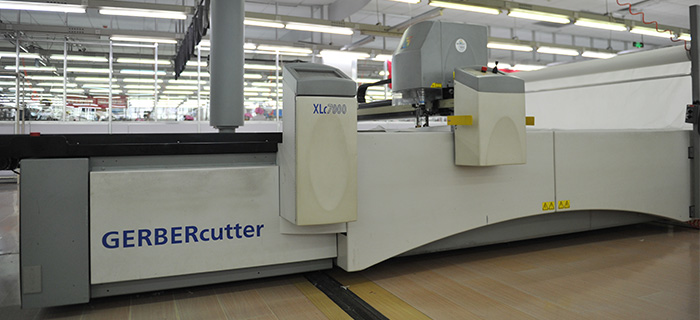
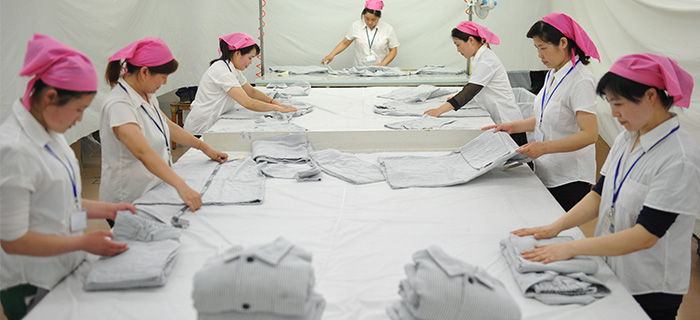
1. Interlining can be divided into non-woven interlining and non-woven interlining. Nonwoven interlining is relatively cheap and easy to use. Basically, you don't need to finish it when you cut it. You just need to pay attention to leveling it when you pull it. Textile interlining is relatively more complex, because some textile linings will have crimping edges, and some will have weft skew, which needs to be corrected. If there is a hanging situation, you need to hit some knife edges or cut off the cloth edges. If there are folded parts, steam jet finishing should be used for leveling, do not use irons to finish directly.
2. When cutting the interlining, you should pay attention to folding the viscous surface inside and then cutting it. When cutting a large area of interlining, you should do the anti-itching of the interlining in advance, so that there will be no errors or mistakes when cutting; if you are cutting small interlining pieces such as bag covers and collars, you can cut directly according to the pattern of the fabric.
3. The interlining needs to be tested and pasted after cutting. During the trial sticking, attention should be paid to the recommended bonding conditions (time, temperature, pressure) of the interlining, and whether the feel, elasticity and hardness of the interlining and the fabric are suitable. Check the discoloration of the fabric after adhesion to see whether the viscose particles are permeable and reverse osmosis, and it is also necessary to observe whether the style of the fabric has changed. Check the shrinkage of the bonded fabric and interlining for blistering and wrinkling.
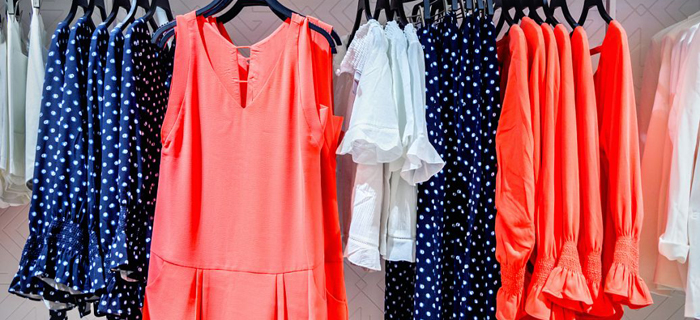
The main function of interlining is to strengthen and expand the clothing, so that the clothing can achieve the effect of inner protruding and outer softness, and the correct use of interlining makes the clothing more aesthetic and stylish.

Foshan gangyunda Trade Co., Ltdis a company specializing in cross-border e-commerce, is a global e-commerce platform multi-category and multi-brand retailer, Shenzhen technology-advanced service enterprises.Along the way, the company has always adhered to market-oriented


